Dear enterprises, we're tired of your subscriptions

When you build a SaaS app, how do you price it? The first option which comes to everyone’s mind is a monthly/yearly subscription model
While building Clarity notes, I was stuck with a usual question when it comes to building a SaaS—How should I price the app? We settled on the usual monthly/yearly pricing structure. It included a free version to allow users to try out the YouTube note-taking feature as well as a Pro Plan involving all the advanced features not available in the free version. We also tailored an Academic Plan, offering students an affordable option to take notes on YouTube.
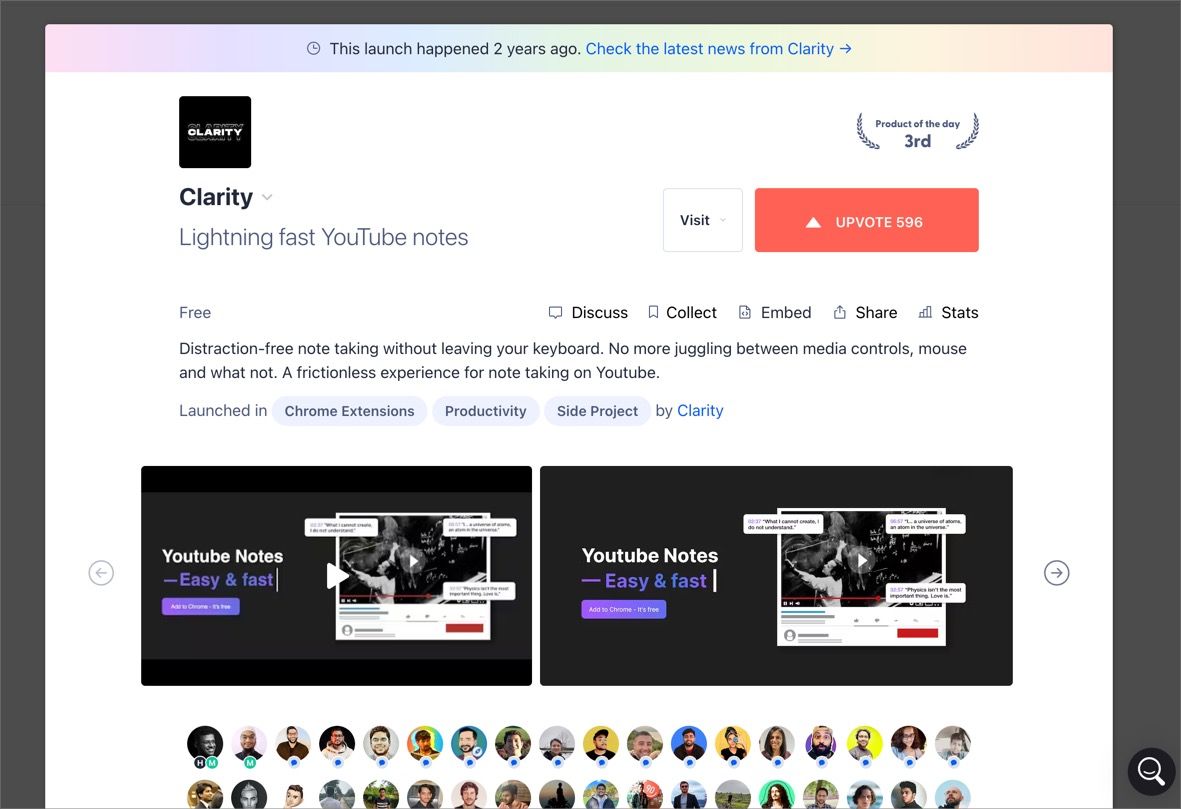
We had a successful initial launch on Product Hunt, #3 Product of the day, and later being a finalist in the Golden Kitty Awards.
I was not an expert in pricing while launching this app. However, it took me time to explore the various options available for pricing in general. If we take the mythical thirty thousand foot view, no matter what we’re actually doing with pricing, whether it’s a — non profit, retail, SaaS, DTC etc — we’re ultimate in the business of value creation. Price, after all, is the exchange rate on the value we’re creating in the world. In Pricing 101, the monthly subscription plan is just one of the many possibilities to set the pricing. There are multiple such value metrics, such as — per seat per 1000 visits, per CPA, per GB used, per transaction etc.
Circling back to the value metric of a monthly subscription we tried out for Clarity Notes, when viewed in isolation, this case might appear appealing — after all, who wouldn’t be tempted by a service costing less than a cup of coffee a month?
Yet, when considering the broader context of numerous SaaS apps and subscriptions vying for a user’s attention, the allure diminishes. In today’s gig economy, there’s a growing trend towards renting rather than owning everything — from daily news sources like the New Yorker to music playlists on Spotify, and even on-demand video services like Netflix and YouTube.
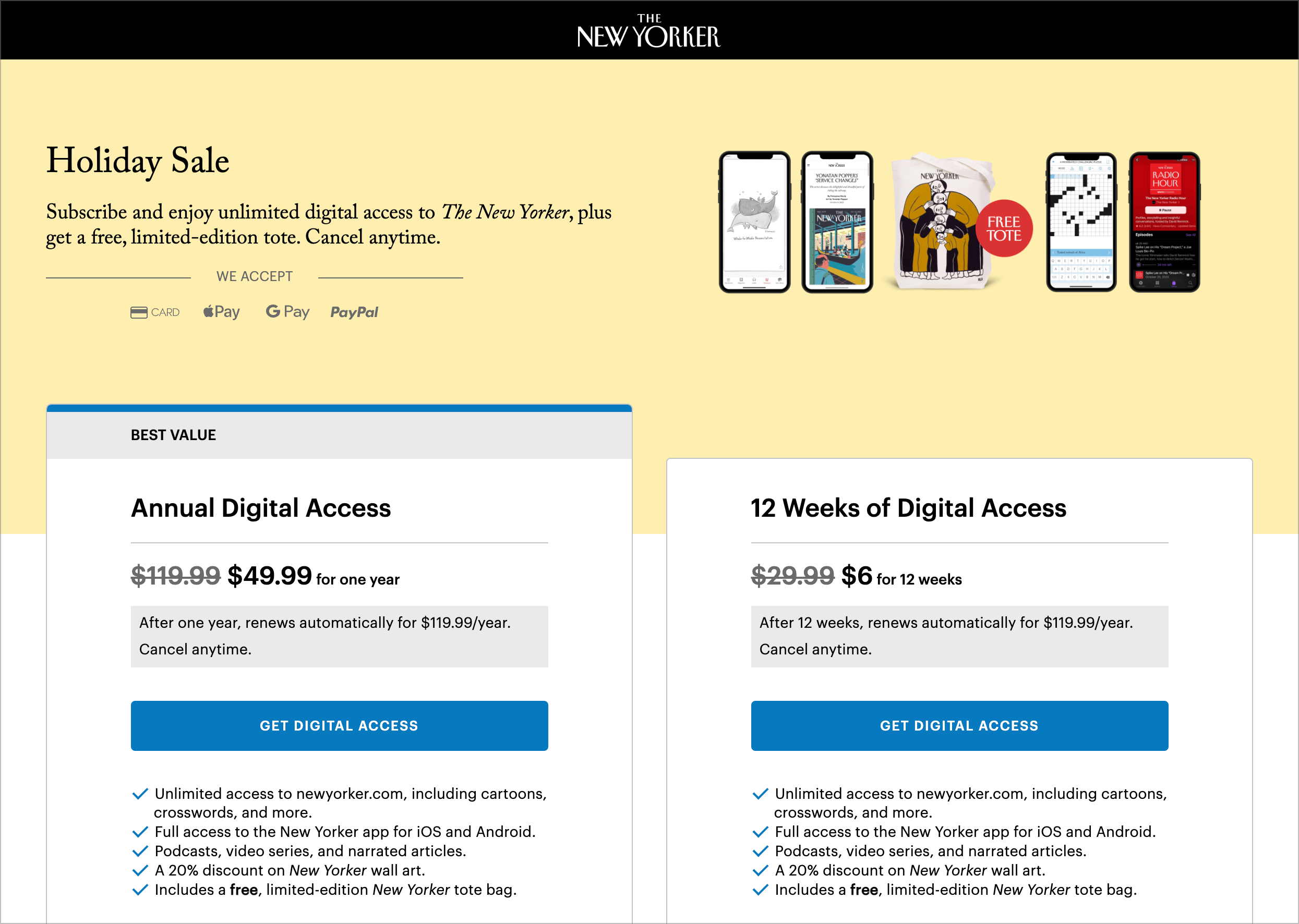
Most SaaS models come with a monthly/annual subscription plan with an option to try it out for a limited period of time
Sure, there are some costs associated with running software — ranging from customer support, cloud storage etc that could justify the monthly subscription model?
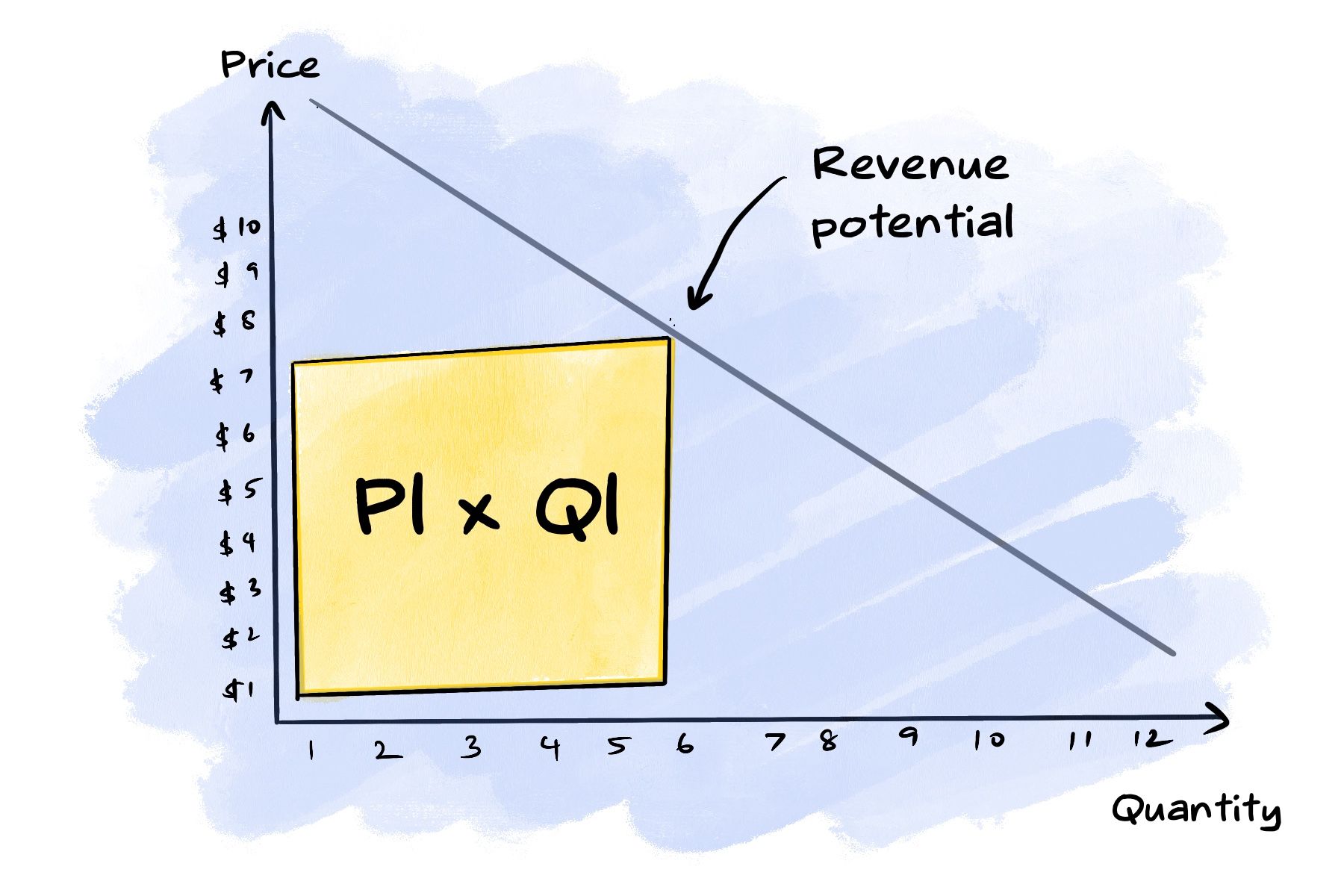
I came across this graph in Lenny’s newsletter which depicts the opportunity cost of not setting the pricing to the right value metric. We’re missing out on revenue by charging just a flat monthly pricing.
If you remember back to your high school or college economics class, the professor put a point on a demand curve for the perfect price and said “the revenue a firm gets is the area under that point.”
The problem here is — what about all that other area under the curve? You’re missing out on that revenue by charging a flat monthly fee.
37signals rolled out an antidote to SaaS monthly subscriptions models with Once, which is a heretic to what it calls the “Church of Recurring Revenue” by selling software the old fashioned way: pay once and host the software. Just because software isn’t sold in a box doesn’t mean it has to be a subscription. “The post-SaaS era is around the corner,” promises Jason Fried, CEO of 37signals.
SaaS still makes sense for many products, but its grip will slip. Installation and administration used to be hopelessly complicated, but self–hosting tech is simpler now and vastly improved. Plus, IT departments are hungry to run their own IT again, tired of being subservient to Big Tech’s reign clouds — Jason Fried
Enterprises might also be facing various other hidden costs apart from hosting tech and providing customer support. Take this software for example — Audionotes.pro
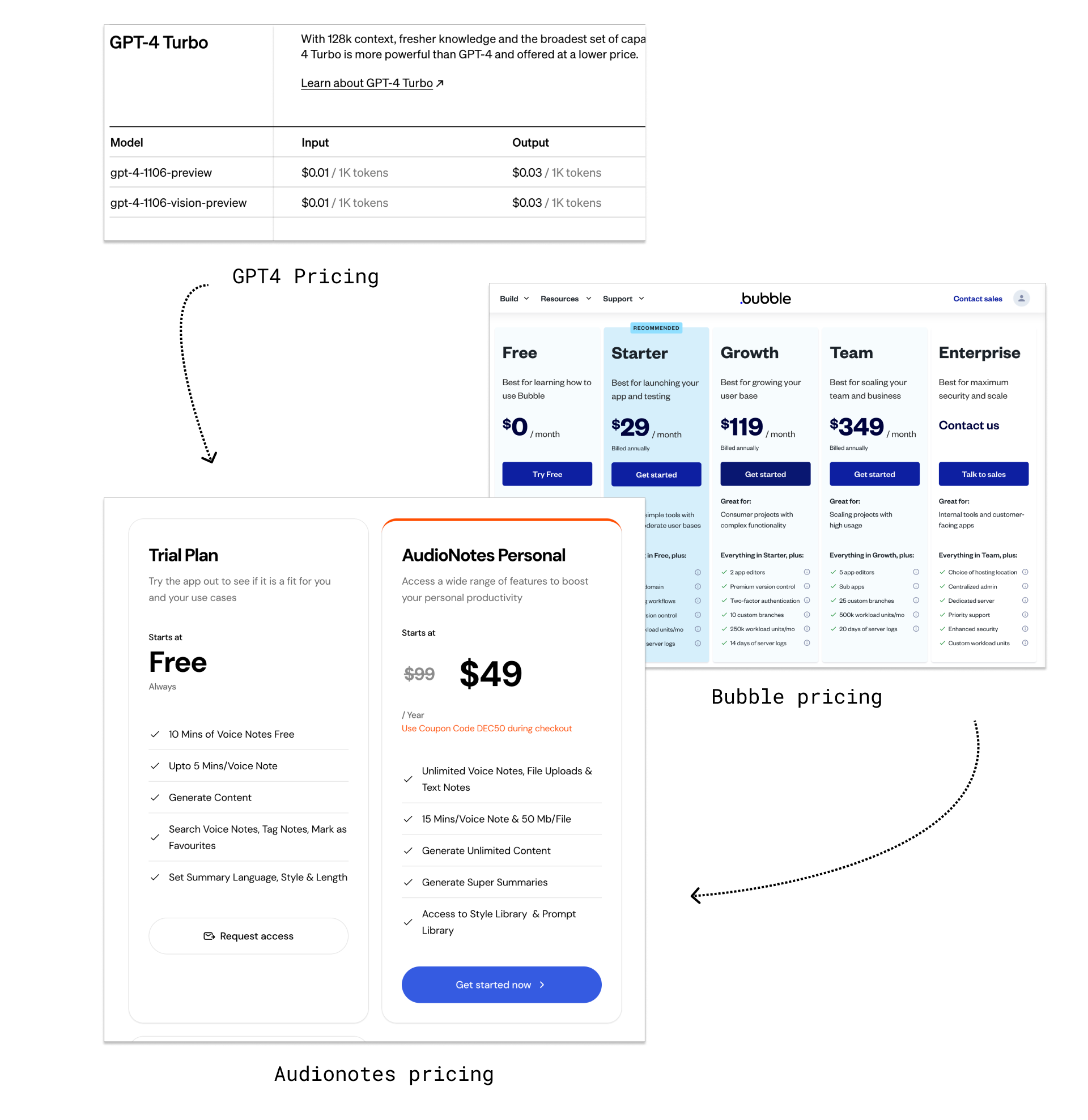
The wrapper on top of another wrapper on top of another wrapper
It’s an application helping you take automatic transcriptions of your audio notes. Audionotes is basically a Bubble application made on top of a GPT-4 API helping process and summarise notes better. It’s a wrapper on top of a subscription wrapper (Bubble) on top of another subscription wrapper (GPT4 API). And we pay for all the wrappers together (as a subscription)
In the long term, the users pay the brunt and might churn from opting into these subscriptions. (It’s one big pyramid scheme of subscriptions for the user). We also cannot blame the enterprises as they are also heavily dependent on various other enterprises offered as subscriptions.
Taking these factors into account, I’ve realised that Clarity notes is not just competing with other Youtube note taking apps, it’s also competing with Youtube, Netflix, Spotify etc. All of us are eating into the same monthly salary, piece by piece.
Which makes us think — Are there any alternative pricing models when it comes to SaaS products?
We’re seeing various innovations in SaaS pricing. Let’s look at five different software pricing models that don’t default to a monthly subscription model.
Lifetime deals
Once you purchase and redeem a lifetime deal, you have access to that tool for the lifetime of the product.
This might seem like a great option for users. You pay once and forget about it. The company also can benefit from the immediate capital injection. They are phenomenal for getting early adopters onboarded FAST.
However, growth might slow down when the lifetime deals end. In this regard, monthly subscriptions are considered a more sustainable offer for the enterprises.
Not just that, with lifetime deals, there is also this risk of complacency in updating and adding new features. However, in subscription models, this comes as a part of the package. Indiehackers place their apps in SaaS boutiques such as Appsumo for getting more visibility.
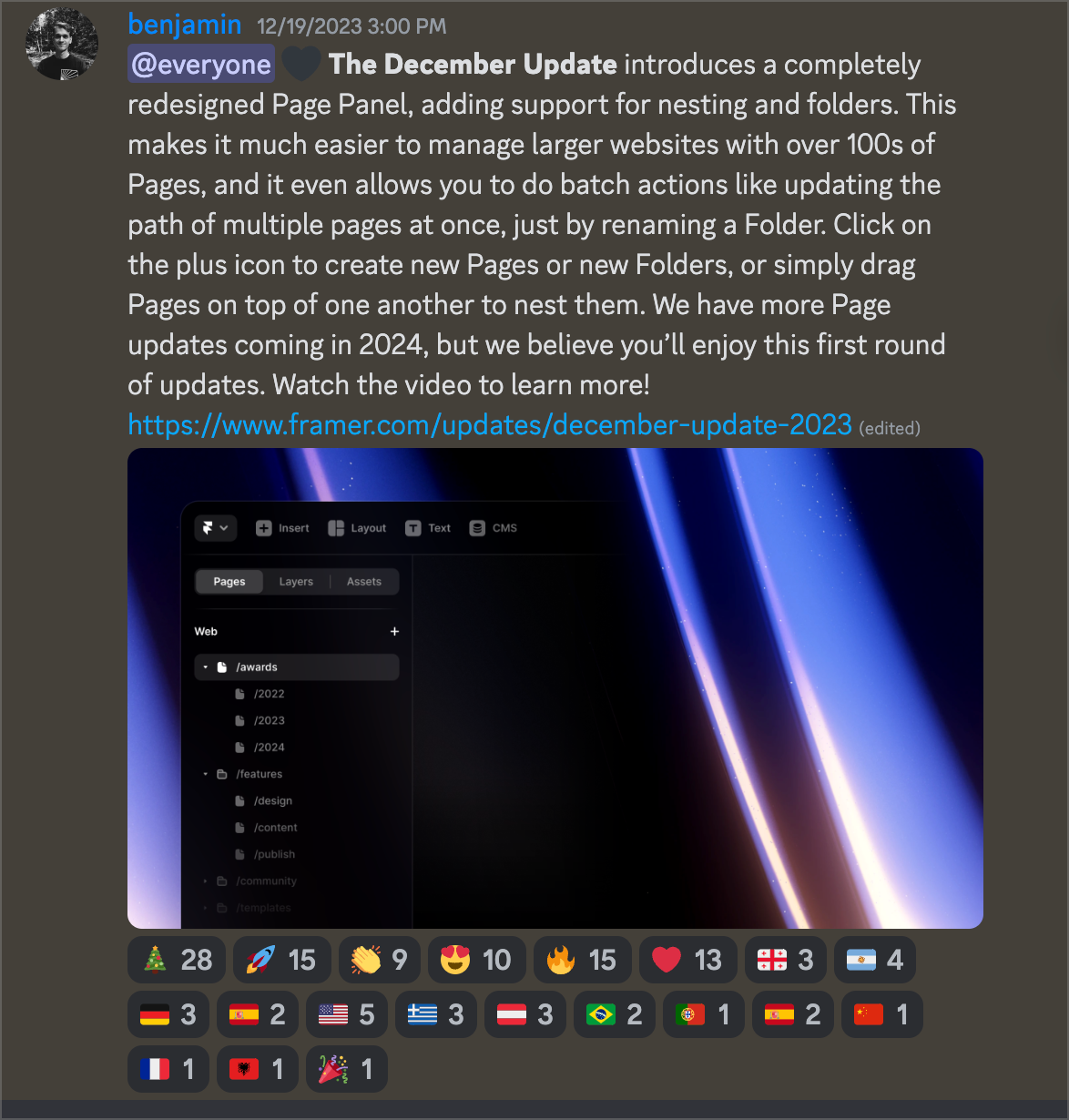
Framer keeps the feature updates visible through their highly active Discord community (Big fan of Benjamin’s community strategy BTW)
Lifetime deals + Monthly subscriptions
iA, the popular writing software has a very contrary take on their SaaS pricing. They offer both. They provide the customers and option to either buy or subscribe.
We tried different things before. We tried high prices, mid-range prices, low prices, free, and freemium. Getting Android users to pay for software is not for the feeble-hearted. So far, offering a free basic version with a choice between paid and subscription seems to be the only thing that works. And that doesn’t mean we buy yachts, it means that we might be sustainable in one or two years.
Surprisingly, the revenue share between one-time payments and monthly subscriptions for iA has been a tie—50/50.
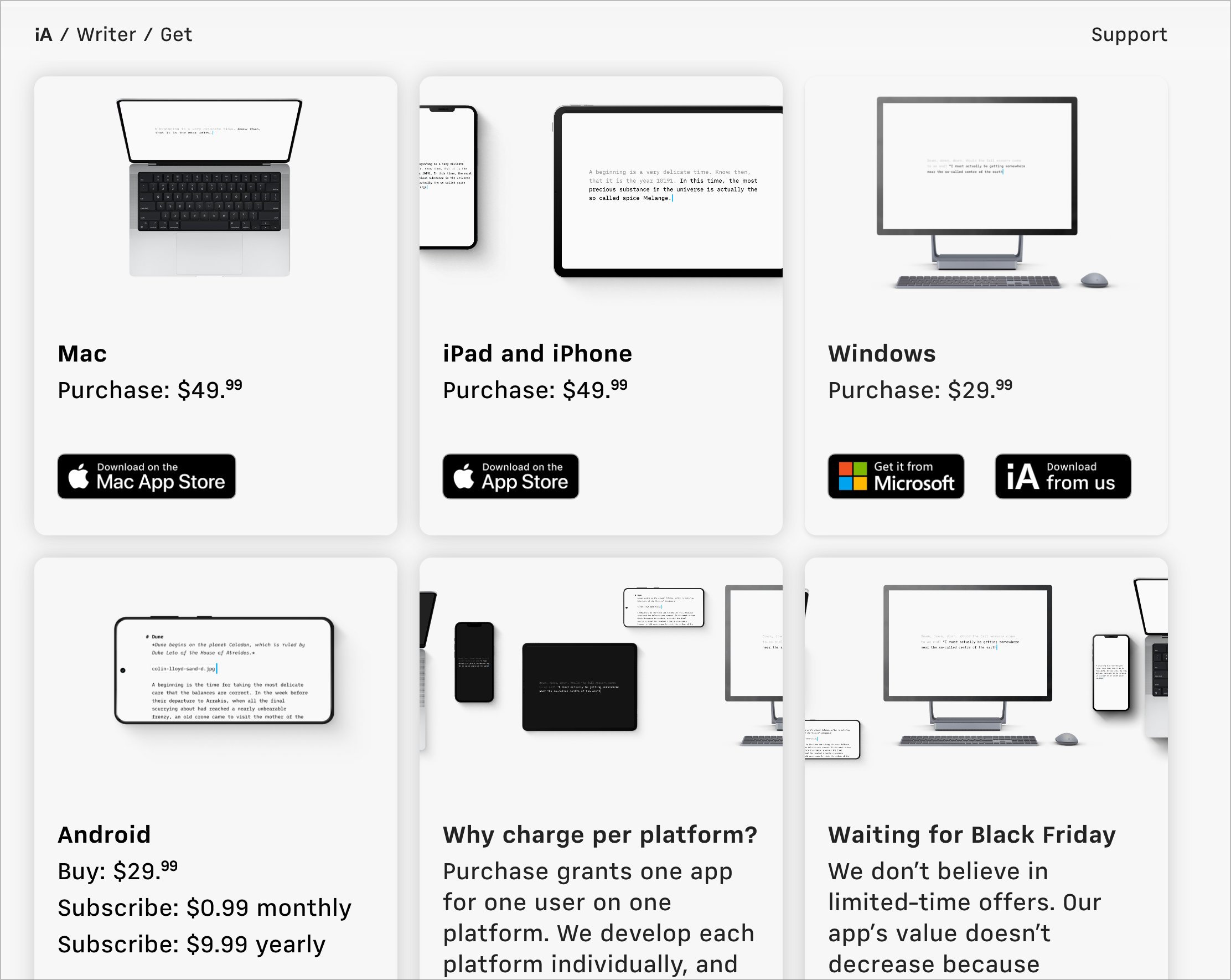
Buy Once + Host on your own server
If we circle back on the definition of a lifetime deal — Once you purchase and redeem a lifetime deal, you have access to that tool for the lifetime of the product.
Apart from the quick capital injection, it might not be sustainable for the enterprise as one might still need to pay for the hosting. These marginal costs might creep up over time.
Jason Fried, the CEO of Basecamp has a new spin to the pricing story. Through Once, they plan to provide users the ability to host the software. They just have to pay one-time for the software, and the rest is up to them to host it the way they would like.
Introducing ONCE, a new line of software products from 37signals. Pay one time, own forever. We write the code, you get to see it. We give you the software, you get to host it. Simple and straightforward, not enterprisey and bloated. For one fixed price. Once.
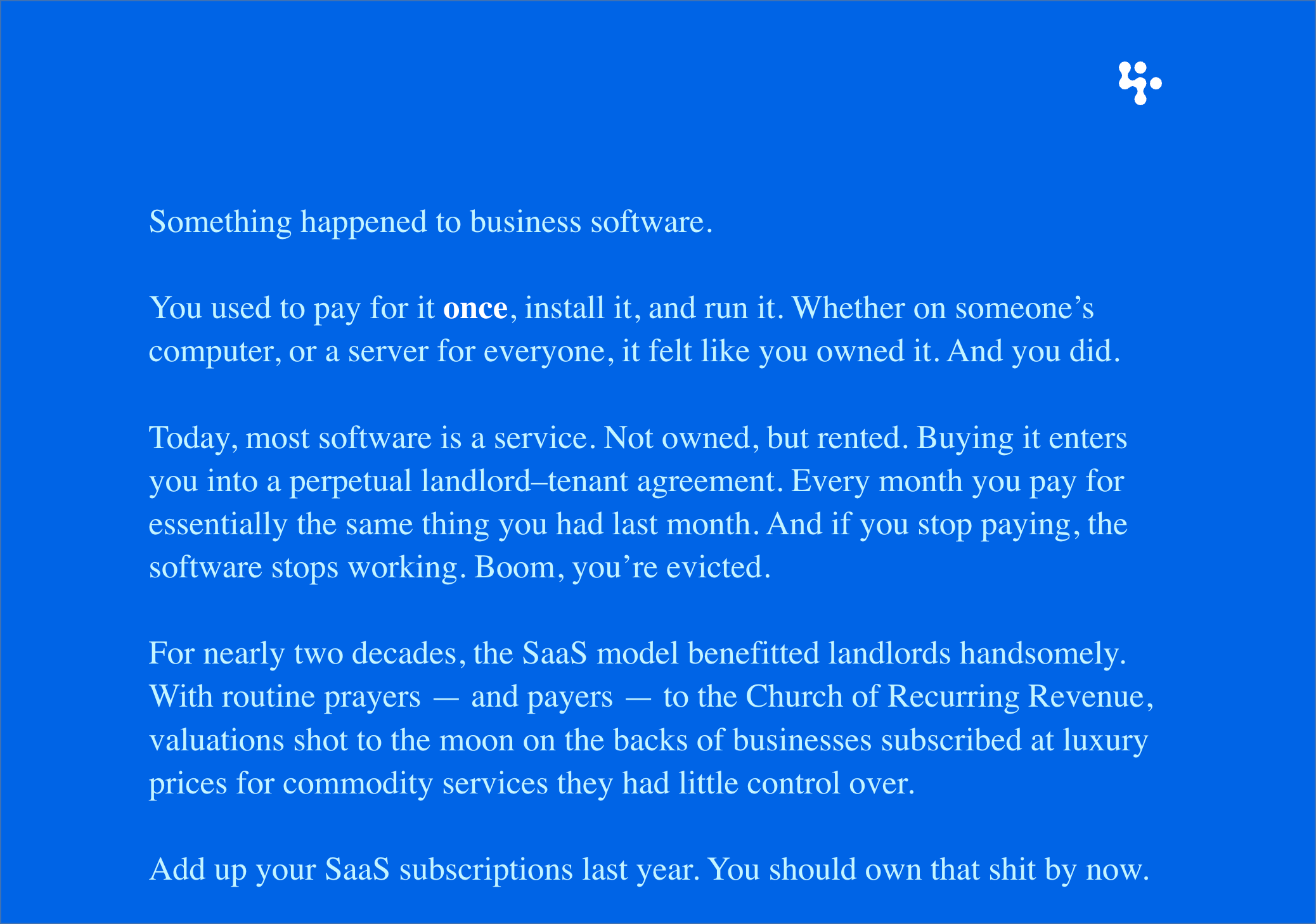
From the landing page of Once
Pay per task
Zapier, a company valued at $5 billion, revolutionized its pricing structure by introducing a “pay-per-task” system, moving away from the traditional monthly subscription model.
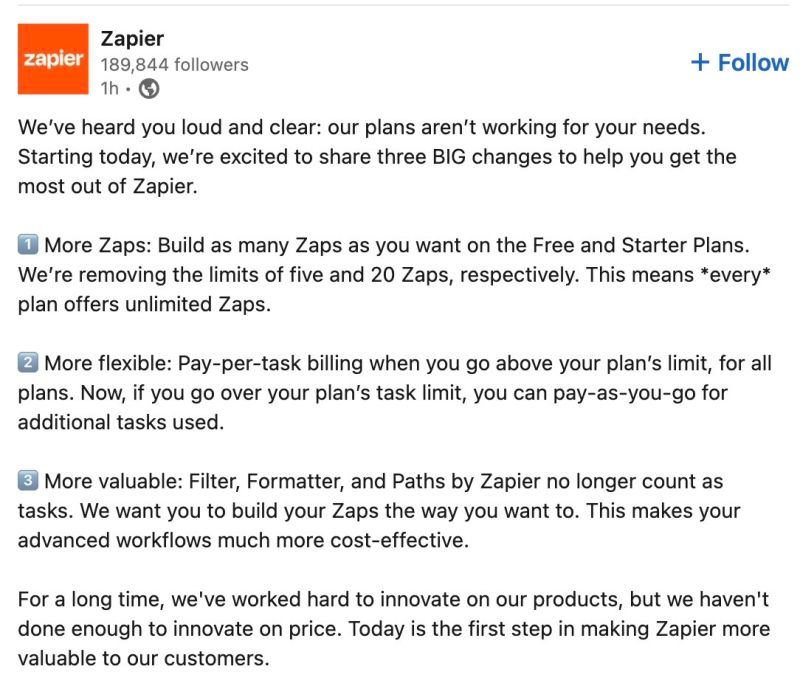
Pay-per-task, as an emerging model, reflects a nuanced understanding of customer preferences and a commitment to meeting their specific needs. This shift is likely driven by growing dissatisfaction with monthly subscriptions. Take, for instance, our annual expenditure of approximately $40,000 on Figma. Each monthly bill is a reminder of the disconnect between our usage and the costs incurred.
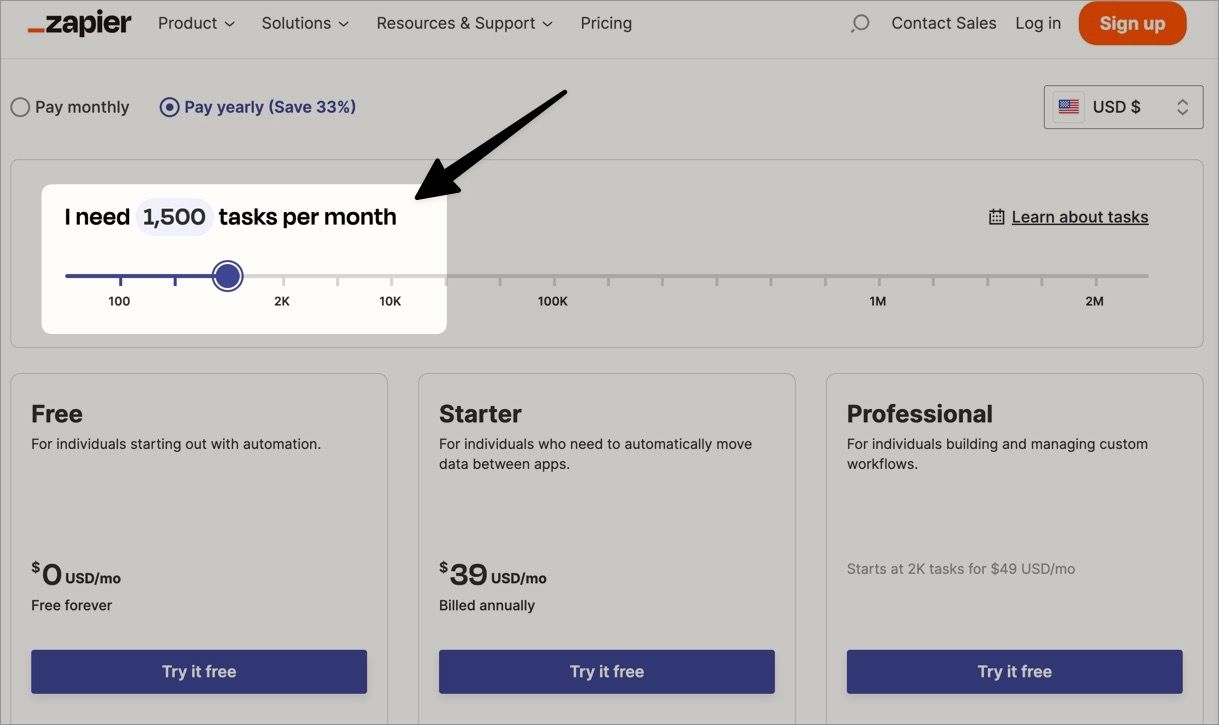
Alternatives like pay-per-pixel, pay-per-project, or one-time purchases are increasingly becoming more appealing.
Software Couture Houses
Recently came across Andy’s !Boring — an independently owned software couture house.
Under the !Boring umbrella, Andy has launched a suite of apps — Weather, Calculator, and Timer, (Not Boring) Habits wildly amplifying a pretty mild-mannered category, tearing down the traditional approach in favor of eye-popping aesthetics, zingy haptics, spiffy 3D animations, and plenty of the delight and fun that nabbed the app its 2022 Apple Design Award.
They are designer-labelled, contrarian, and far from the default. As the title claims to ‘ditch the default, and to support interesting’ —
“It’s about adding something extra,” says Allen. “You can write a to-do list on a piece of paper and it works just the same, right?” If strict practicality is your goal, the app ecosystem is swimming in weather apps and habit trackers, and Allen is the first to admit that (Not Boring) apps aren’t for everyone. “But,” he says with a smile, ”they’re definitely really for some people.” — Apple Developers
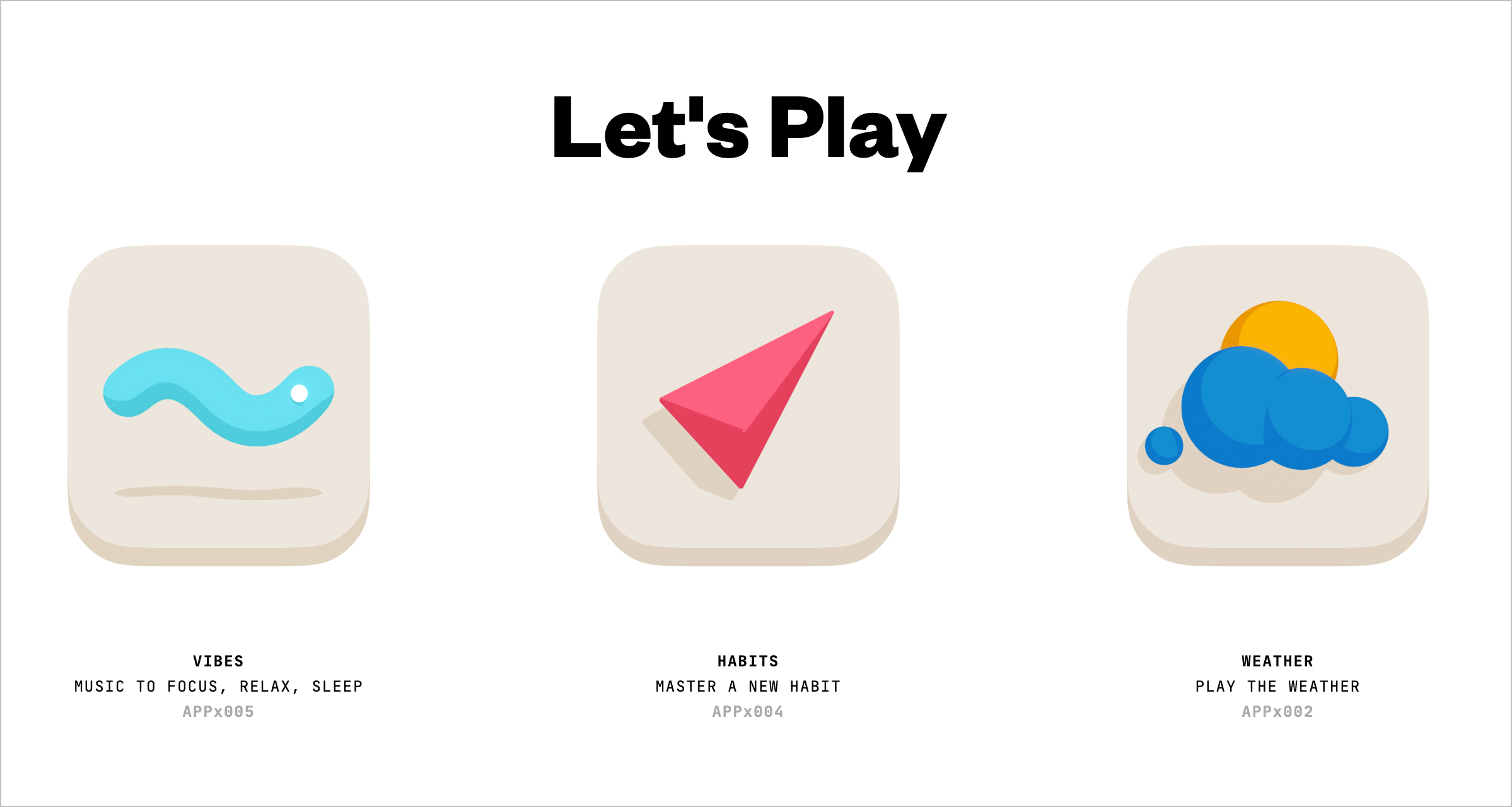
How does the pricing work? — You pay for the membership and get access to the entire range of apps that are developed by Andy. It’s more like a SaaS, but instead of paying for one app, you pay for the whole gamut of apps. It’s a bit different from an aggregator such as Appsumo as it’s not a collection of curated applications.
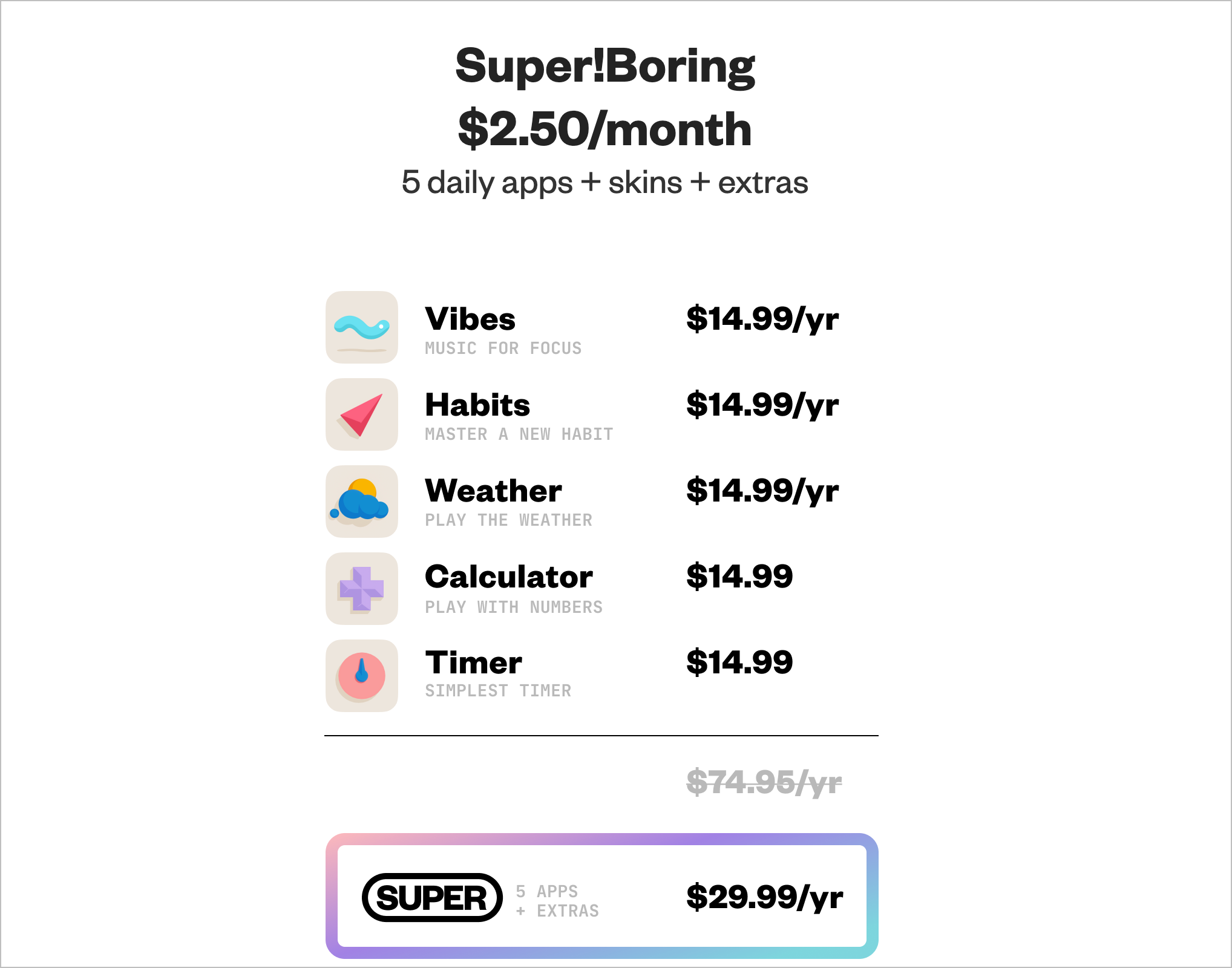
I foresee many such software couture houses.
What’s next?
Historically, we have always taken the stance of function over form, and to just GET THE JOB DONE. However, this very act has backfired in some cases. People don’t just seek utility, but also fun and delight.
I just wanted to conclude this incomplete essay with a quote by Verganti, a pioneer in design-driven innovation—People don’t buy products. People buy meanings.
Dear enterprises, we’re tired of your subscriptions. We seek newer meanings and want to rethink our relationship with software.
It’s nice to see various such relationships emerge, as shown from the earlier examples — ranging from renting, to owning, to renting partially, to owning a suite of apps, to even renting a suite of apps. Software is eating the world. And let’s make sure that it eats the world the right way.
Read more
- Home is where the feeling of home residesreflections
- Notes on doing most good, doing some good, and living goodphilanthropy
- Notes on Londontravel
- 18 key ideas from reading Henrik Karlsson this monthwriting
- Venn-diagram based decision makingmathematics
- Co-creative loops are everywheremental-models
- Life lessons and hot takes from my 30slifestyle
- Building a skill for coherent science illustrationsscience
- My agentic engineering workflow (step by step)agentic-coding
- Hammock driven developmentagentic-coding
- Peculiar ways number three fits into our funny little brainsmental-models
- AI sandwich as a defacto principle for anything agentic engineering relatedagentic-coding
- Authority in the guise of evidencecritical-rationalism
- Map is not the territoryphilosophy
- Self hypnosis as a manifestation ritualmeditation
- Hegelian dialectic for structured reasoning with AI agentsphilosophy
- How I prepare for tough negotiations nowadaysnegotiation
- When should we steelthread somethingproduct-development
- Breadboarding, shaping, slicing, and steelthreading solutions with AI agentsproduct
- Healthy conflict in teams have a tipping pointteam-building
- How I deslopify AI writingwriting
- How I started building softwares with AI agents being non technicalagentic-coding
- Read raw transcriptswriting
- Legible and illegible tasks in organisationsproduct
- L2 Fat marker sketchesdesign
- Writing as moats for humanswriting
- Beauty of second degree probesdecision-making
- Boundary objects as the new prototypesprototyping
- One way door decisionsproduct
- Finished softwares should existproduct
- How I periodically rank my rough draftsobsidian
- Flipping questions on its headinterviewing
- Vibe writing maximswriting
- How I blog with Obsidian, Cloudflare, AstroJS, Githubwriting
- How I build greenfield apps with AI-assisted codingagentic-coding
- We have been scammed by the Gaussian distribution clubmathematics
- Classify incentive problems into stag hunts, and prisoners dilemmasgame-theory
- I was wrong about optimal stoppingmathematics
- Thinking like a shipmental-models
- Hyperpersonalised N=1 learningeducation
- New mediums for humans to complement superintelligenceagentic-coding
- Maxims for AI assisted codingagentic-coding
- Virtual bookshelvesaesthetics
- It's computational everythingtrends
- Public gardens, secret routesdigital-garden
- Git way of learning to codeagentic-coding
- Style Transfer in AI writingagentic-coding
- Understanding codebases without using codeagentic-coding
- Vibe coding with Cursoragentic-coding
- Virtuoso Guide for Personal Memory Systemsmemory
- Writing in Future Pastwriting
- Publish Originally, Syndicate Elsewhereblogging
- Poetic License of Designdesign
- Idea in the shower, testing before breakfastsoftware
- Technology and regulation have a dance of ice and firetechnology
- How I ship "stuff"software
- Writing is thinkingwriting
- Song of Shapes, Words and Pathscreativity
- How do we absorb ideas better?knowledge
- Read writers who operatewriting
- Brew your ideas lazilyideas
- Trees, Branches, Twigs and Leaves — Mental Models for Writingwriting
- Compound Interest of Private Noteswriting
- Conceptual Compression for LLMsagentic-coding
- Meta-analysis for contradictory research findingsdigital-health
- Proof of workproduct
- Gauging previous work of new joinees to the teamleadership
- Task management for product managersproduct
- Beauty of Zettelswriting
- Stitching React and Rails togetheragentic-coding
- Exploring "smart connections" for note takingwriting
- Deploying Home Cooked Apps with Railssoftware
- Repetitive Copypromptingwriting
- Questions to ask every decadejournalling
- Balancing work, time and focusproductivity
- Hyperlinks are like cashew nutswriting
- Brand treatments, Design Systems, Vibesdesign
- How to spot human writing on the internetwriting
- Can a thought be an algorithm?product
- Opportunity Harvestingcareers
- Everything is a prioritisation problemproduct
- Nowlifestyle
- How I do product roastsproduct
- The Modern Startup Stacksoftware
- In-person vision transmissionproduct
- How might we help children invent for social good?social-design
- The meeting before the meetingmeetings
- Design that's so bad it's actually gooddesign
- Lessons learnt interview prepping for product rolesinterviewing
- Obsessing over personal websitessoftware
- English is the hot new programming languagesoftware
- Better way to think about conflictsrisk-management
- The role of taste in building productsdesign
- Products need not be user centereddesign
- World's most ancient public health problemsoftware
- Pluginisation of Modern Softwaredesign
- Let's make every work 'strategic'consulting
- Making Nielsen's heuristics more digestibledesign
- Startups are a fertile ground for risk takingentrepreneurship
- Insights are not just a salad of factsdesign
- Minimum Lovable Productproduct
- Methods are lifejackets not straight jacketsmethodology
- How to arrive at on-brand colours?design
- Minto principle for writing memoswriting
- Importance of Whytask-management
- Quality Ideas Trump Executionsoftware
- Why I prefer indie softwareslifestyle
- Use code only if no code failscode
- Self Marketing
- Personal Observation Techniquesdesign
- Design is a confusing worddesign
- A Primer to Service Design Blueprintsdesign
- Rapid Journey Prototypingdesign
- Visualise detailed file structures on CLIcli
- Do's and Don'ts of User Researchdesign
- Design Manifestodesign
- Complex project management for productproducts
- How might we enable patients and caregivers to overcome preventable health conditions?digital-health
- Pedagogy of the Uncharted — What for, and Where to?education
- Future of Equity with Ludovick Petersinterviewing
- Future of Ageing with Mehdi Yacoubiinterviewing
- Future of Tacit knowledge with Celeste Volpiinterviewing
- Future of Mental Health with Kavya Raointerviewing
- Future of unschooling with Che Vanniinterviewing
- Future of Rural Innovation with Thabiso Blak Mashabainterviewing
- Future of work with Laetitia Vitaudinterviewing
- How might we prevent acquired infections in hospitals?digital-health
- The why to endure any howentrepreneurship
- Design education amidst social tribulationsdesign
- How might we assist deafblind runners to navigate?social-design